COO
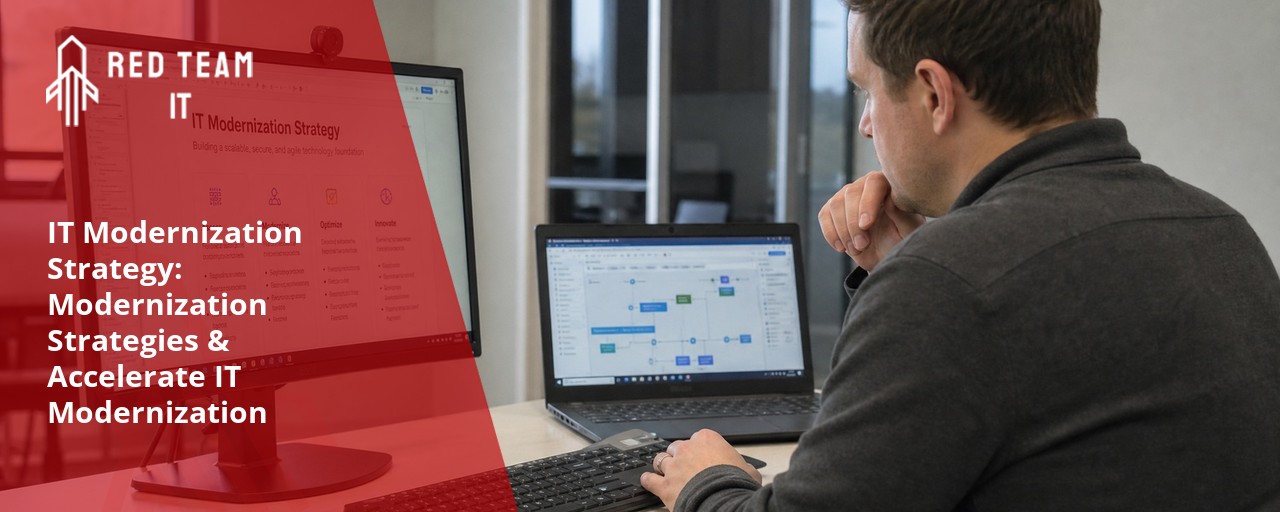
Upgrading your business technology is more important than ever. An effective IT modernization strategy can help you stay competitive, reduce risks, and improve efficiency. In this blog, you’ll learn what IT modernization means, why it matters, and how to build a plan that works. We’ll also cover key modernization strategies, ways to modernize outdated systems, and best practices for digital transformation. You’ll see how automation, cloud computing, and artificial intelligence can help streamline your workflow and align technology with your business objectives.
An IT modernization strategy is a plan for updating your technology to meet current business needs. This means replacing outdated systems, improving cybersecurity, and making sure your technology can grow with your company. A good strategy helps organizations avoid disruption, improve efficiency, and support digital transformation.
Modernization efforts often include upgrading legacy systems, integrating cloud services, and automating manual tasks. By focusing on scalability and aligning IT with business objectives, you can ensure your technology supports your goals now and in the future.

Building an effective IT modernization strategy takes careful planning. Here are the main steps you should follow to get the best results:
Start by reviewing your existing technology. Identify outdated systems, security gaps, and areas where your workflow could be improved. This helps you understand what needs to change and where to focus your efforts.
Set specific goals for your modernization project. Do you want to improve efficiency, reduce costs, or support new digital services? Clear objectives help guide your decisions and keep your project on track.
Not all upgrades need to happen at once. Decide which systems or processes are most critical to modernize first. This phased approach helps you manage costs and minimize disruption.
Select modern tools that fit your needs. Cloud computing, automation, and artificial intelligence can make your IT more scalable and flexible. Make sure new technologies integrate well with your existing systems.
Your team should include IT experts, business leaders, and end users. Collaboration ensures your modernization efforts align with business needs and are adopted smoothly across the organization.
Track your progress and be ready to make changes as needed. Regular reviews help you spot problems early and keep your modernization strategy effective over time.
A well-planned IT modernization strategy offers many advantages:

To get the most value from your IT modernization strategy, it’s important to align technology upgrades with your business objectives. This means understanding what your company needs now and in the future. For example, if your goal is to expand into new markets, you might focus on cloud services and automation to support remote teams and faster workflows.
Modernization should also consider regulatory requirements and industry standards. By aligning IT with business needs, you can make sure every upgrade supports your long-term goals and helps your organization stay competitive.
Speeding up your IT modernization strategy can bring faster results and help you stay ahead. Here are some proven approaches:
Moving to the cloud lets you scale resources quickly and access the latest technology without large upfront costs. Cloud services also make it easier to support remote work and disaster recovery.
Automation can handle repetitive jobs like data entry or system monitoring. This frees up your team to focus on higher-value work and reduces the risk of human error.
Replacing or updating old software and hardware helps avoid security risks and performance issues. Modern systems are often more reliable and easier to maintain.
AI tools can analyze data, predict trends, and automate complex processes. This can improve decision-making and help you respond faster to business changes.
Optimizing your data center setup can lower costs and improve performance. Consider consolidating servers, using virtualization, or moving to managed services for better efficiency.
Using agile project management helps your team adapt quickly to changes and deliver results faster. Agile methods encourage regular feedback and continuous improvement.
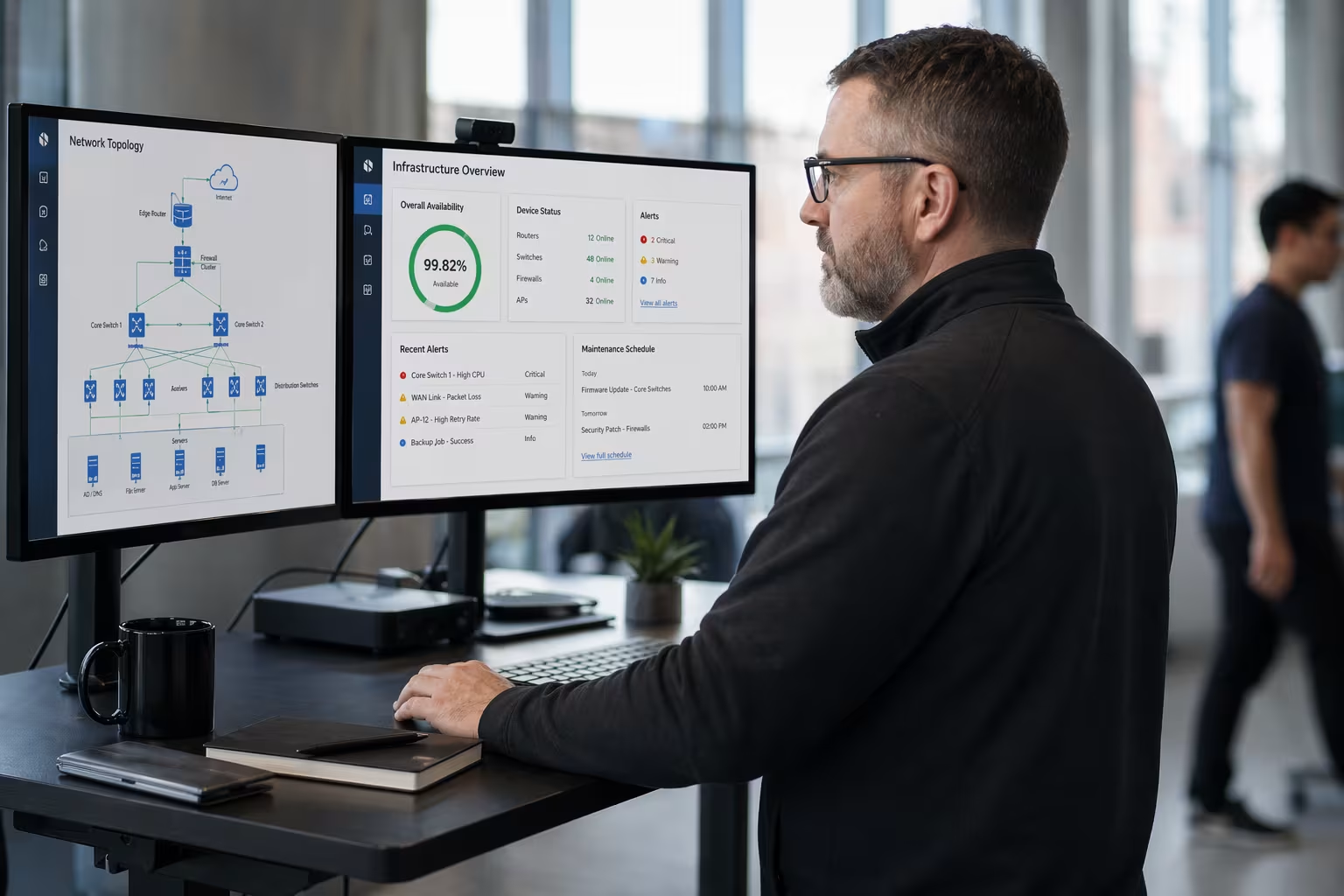
Rolling out an IT modernization strategy takes careful planning and communication. Start by involving key stakeholders early, including IT staff, business leaders, and end users. This helps everyone understand the benefits and reduces resistance to change.
Set a realistic timeline and budget for each phase of your project. Use IT cost optimization strategies to control expenses and avoid surprises. Regular training and support help your team adapt to new systems and processes, making the transition smoother.
Follow these best practices to get the most from your IT modernization efforts:
By following these steps, you can build a modernization strategy that delivers real value and supports your business goals.

Are you a business with 50 or more users looking to modernize your IT systems? If you’re growing and need technology that keeps up, we can help you build an IT modernization strategy that fits your needs and budget.
Our team specializes in helping organizations upgrade, automate, and streamline their technology. We’ll work with you to identify the right solutions, manage the process, and support your team every step of the way. Contact us today to get started.
For midsize businesses, focusing on upgrading legacy systems and integrating cloud computing is key. These steps help improve efficiency and reduce the risk of disruption. By aligning your IT with business objectives, you can make sure your technology supports growth and adapts to changing needs.
Modernization strategies should also include automation and enhanced cybersecurity. These initiatives help organizations streamline workflows and protect sensitive data while supporting long-term scalability.
To accelerate IT modernization, use a phased approach that targets the most critical systems first. This helps minimize downtime and keeps your business running smoothly. Prioritize upgrades that offer the biggest impact, such as automating manual tasks or moving to cloud services.
Effective planning and clear communication with your team are essential. By involving stakeholders early and providing training, you can ensure a smooth transition and reduce resistance to change.
Modernizing legacy systems means updating or replacing old software and hardware to meet current business needs. This can involve migrating data to new platforms, integrating with cloud services, or automating manual processes. The goal is to improve efficiency and reduce maintenance costs.
Legacy systems often lack scalability and can pose security risks. Upgrading these systems helps organizations stay competitive and better support digital transformation initiatives.
Digital transformation is about using technology to change how your business operates and delivers value. It’s a core part of any IT modernization strategy, as it often requires new tools, updated workflows, and a shift in company culture.
By focusing on digital transformation, you can integrate artificial intelligence, cloud computing, and automation into your operations. This helps you respond faster to market changes and improve customer experiences.
Effective IT modernization helps organizations improve efficiency, reduce costs, and support business growth. It allows you to scale technology as your company expands and ensures you can adopt new digital tools quickly.
Other benefits include better cybersecurity, more reliable systems, and easier compliance with industry regulations. A strong modernization strategy also helps you avoid disruption and stay ahead of competitors.
Automation reduces manual work and lowers the risk of errors, which can save time and money. Upgrading your data center with modern, scalable solutions also helps control costs by improving energy efficiency and reducing maintenance needs.
Combining automation with data center improvements supports IT cost optimization strategies and makes it easier to adapt to new business requirements. This approach helps organizations streamline operations and focus resources where they matter most.
.svg)
%2520(1).png)